The Hog’s View: Two Takeaways From Davos 2018 [The Investor’s View]
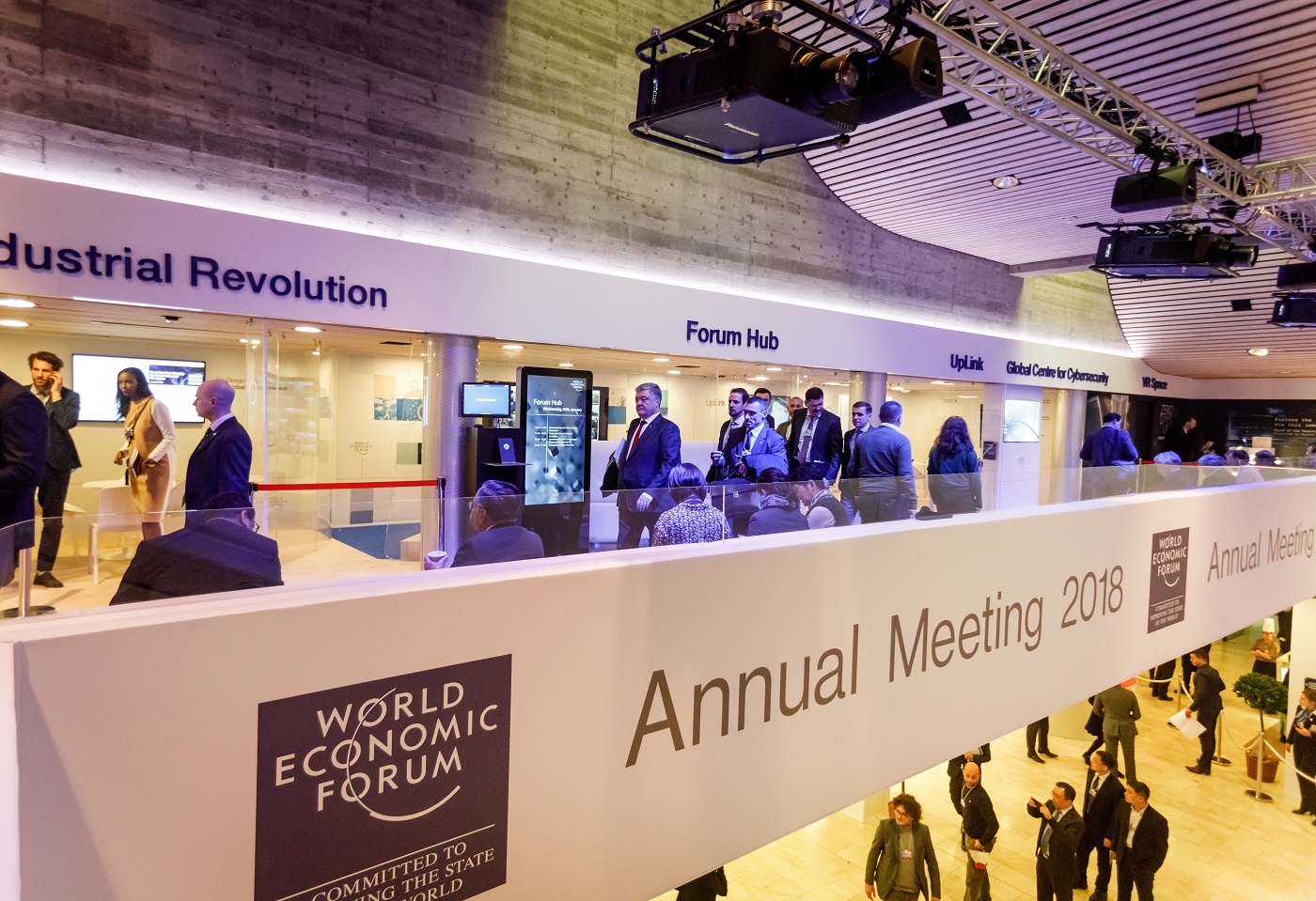
Many leading newspapers and magazines have reported on this year’s gathering at the World Economic Forum in Davos. Here are our two main takeaways from Davos 2018 from the perspective of an individual investor.
-
Trumpism – Good for Globetrotting Billionaires
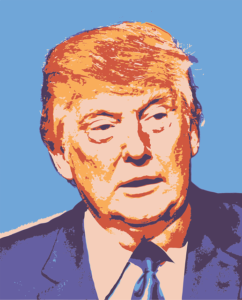 Nearly everyone who attended Davos – from the Three Big M’s (Macron, Modi, and Merkel), down to the lowliest of NGO functionaries – expected Donald Trump’s visit to the Swiss resort to be yet another episode of fire and fury. The media salivated at the prospect of another confrontation like the Donald’s address to the United Nations, where his audience could barely contain their hostility – and the President didn’t even attempt to conceal his.
They were all disappointed. The first visit by a US president to this particular meeting of the Great and Good (motto: Committed to Improving the State of the World) since Bill Clinton was subdued and, whisper it, almost statesmen like.
There were many reasons for this. One is that Trump was clearly preoccupied with the tussle back home about DACA, and the resulting shutdown of the US government. One is that there really wasn’t all that much for Trump to do. But any investors keeping an eye on what transpired during the President’s brief visit – and afterwards – would actually notice something quite interesting about a lot of what happened.
First came is a rote recitation of all the ‘wins’ he’s secured for the US economy over the last ten months or so – a bullish stock market, low unemployment. Then came his usual jab at the media – ‘it wasn’t until I became a politician, that I realized how nasty, how mean, how vicious and fake the press can be’ – which was predictably met with booing and hissing. In essence, in the midst of all of the hobnobbing, the President dropped hints that he’s not so much against globalization as he is against globalization that’s not on America’s terms – and that if people are willing to place America First ©, he may be willing to open the US market to them.
The first of his gently dropped bombshells: ‘As I have said, the United States is prepared to negotiate mutually beneficial, bilateral trade agreements with all countries. This will include the countries within TPP, which are very important.’ Wait – what? A bilateral trade treaty with TPP? And then, one of his most internationalist statements to date:
From my first international G-7 summit to the g20, to the U.N. General assembly, to APEC, to the world trade organization and today at the world economic forum my administration has not only been present but has driven our message that we are all stronger when free, sovereign nations cooperate towards shared goals and they cooperate toward shared dreams. Represented in this room are shared dreams.
So what is going on here? The answer lies in the kind of internationalism Trump envisions. To him, and many of his advisors, the governing ideology of international relations is something called ‘realism’ – a body of thought that has found institutional favor in Russia and China as well, and hence explains at least part of the commonality the current US regime has with rulers in those countries. Realism posits that countries will act, consistently, in their interests, and their own interests only. In this interpretation of the world, there are no real friends, only temporary allies. A country that does not look to itself will end up being devoured by wolves.
But realism has never denied internationalism. Quite to the contrary, some realist thoughts places global competition – for resources and influence – at the heart of successful statecraft. You may not have real allies, but you sure as hell need clients. You need people to buy your stuff and come fight by your side when the feces, inevitably, hits the fan. So as a ruler, who do you look to in order to bolster your power, and your influence?
Why, other people who see the world the same way as you, of course. And Davos was full of such people for Trump – globetrotting billionaires whose capital and influence extend across national borders and, in some cases, render them irrelevant. This is the core of Trump’s internationalism: an economic network divorced from such petty considerations as what is politically or morally right, and focuses instead on pure, unadulterated capitalism – a system that you can benefit from, provided you know how to win.
2) It’s Risk On – Nothing Else Matters
Despite paying lip services towards pressing issues such as rising inequality, the risk to emerging markets in having to deal with Trumpism can’t be ignored. CEOs sucking up to Trump’s presence, and the fact that many attendees did very well for themselves in 2017, helped to focus on some more exciting topics than seriously addressing underlying issues in the global economy – such women’s’ rights or (in America’s case), opioid abuse.
One of these exciting topics was cryptocurrencies. Phrases like “blockchain”, “cryptocurrencies” and “bitcoin” were on everyone’s lips, though as a journalist for Fortune noted, “Most would be hard-pressed to tell you why.”
For people on the sidelines, the choice appears to be between the camp of fervent fanatics who claim nothing short but the second coming of Jesus (in the mundane world of financial transactions that is), or those who warn of all the evil imaginary currencies could bring. The reality, as is so often the case, is somewhere in between. But with all the debate of FinTech or blockchain, it highlighted the general mood financial markets around the world – the growing confidence to take risks in the name of better profits.
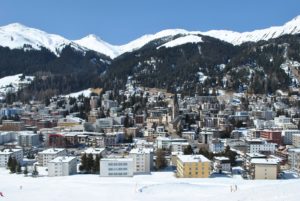 Hence, the mood we would describe at Davos was: Risk on – with accelerating momentum. No one wants to be left behind, as the risk of missing out and being stamped the uncool kid in the neighborhood is too big. But it is this particular market environment smart investors should be concerned about the most, regardless of the asset in question. Record inflows in ETFs, rising popularity of money pools that place big bets on blockchain or the record number of M&A transactions and IPOs should all be signs we are in the last innings of a larger market cycle.
These favorable market conditions might continue for several months or even years as there are no limits to what a greed-infested crowd can do. But you don’t want to overstay the party either and help with the messy cleanup. In this moment of market optimism and unconstrained enthusiasm, it’s time to pay close attention to risks the consensus likes to oversee or downplay. Once again, it’s time to do the exact opposite of the general herd. Among smart money it’s called contrarian investing – we call it prudent risk management.